For HR, D&I and leadership
A single burnout case costs 50 to 200 percent of an annual salary.
Documented by SHRM and Gallup. 15 to 20 percent of every workforce is neurodivergent. Many undiagnosed, all at elevated burnout risk.
Why doing nothing gets expensive
- 15 to 20 percent of the workforce is neurodivergent (Doyle 2020, CIPD). Autism (2–3%), ADHD (5–8%), dyslexia (5–10%) and other forms frequently overlap.
- Burnout is the most common cause of long-term absence among autistic and ADHD employees.
- Burnout before resignation causes sick days, reduced performance and knowledge loss. The subsequent turnover costs sit between 50 percent of annual salary (standard roles, SHRM) and 200 percent (specialised technical and leadership roles, Gallup). Plus onboarding time and follow-on turnover across the team.
- Structural adjustments have been shown to outperform isolated awareness workshops.
Autistic Mirror intervenes at this point: employees understand their neurology before overload occurs. Managers and colleagues recognise warning signs as neurological mechanisms rather than performance issues or difficult personality. This reduces escalation, sick days and turnover.
Every question is welcome. The app answers work-related, social and personal questions about autistic neurology. Every response is guaranteed free of deficit framing, stigmatisation and normalisation pressure.
Sources: SHRM, Gallup State of the Global Workplace, Deloitte Insights, Doyle (2020), CIPD. Learn more: Why general AI is risky for autistic people.
Four ways we work with you
You choose the depth. From a single impulse to a scalable platform.
🎤 Keynotes
60 to 90 minutes that recalibrate an entire auditorium. First-hand, mechanism-grounded, without pathologising.
👥 Workshops
Half or full days for HR, leaders or mixed teams. Concrete exercises, clear language, structures you can apply immediately.
🧭 Strategy consulting
Engagements over weeks or months. We review processes, return-to-work, recruiting and onboarding and build structures rather than awareness posters.
✨ Mirror Suite PLATFORM
Scalable AI platform for employees, leaders and family members. Credit-based, confidential, no AI training on user data.
Concrete use cases
Return-to-work meetings
Employees understand before a return-to-work meeting why masking led to burnout.
Team onboarding
Managers use the employer perspective to identify common misunderstandings.
Disclosure decision
Employees can think through whether and how to disclose a diagnosis at work.
Sensory adjustments
Neurological context for concrete questions about open-plan offices, lighting, noise and meetings.
Conflict de-escalation
After team conflicts both sides understand the neurological background (Double Empathy).
Parents at work
Working parents of autistic children use the parent perspective alongside the inner view.
What questions do employees ask?
"Why am I exhausted after meetings even though I said nothing?"
"How do I explain to my team why I need headphones?"
"My employee withdraws when plans change. What is happening neurologically?"
"Our child has just been diagnosed. How do we handle this as parents?"
One platform, 14 perspectives, 15 co-occurring conditions
Autistic Mirror differentiates between an inner view and 13 external roles. Each role is further refined by self-affectedness, AuDHD, five age groups and 15 co-occurring conditions (more than 18 effective variants). Employees automatically build a personal glossary and bookmark library.
The knowledge base covers 85 specialised concepts from current autism research (monotropism, predictive coding, sensory processing, autistic inertia and more). The methodology has been submitted to the journal Autism in Adulthood and is in peer review.
Inner view
External view (13 roles)
We also account contextually for 15 frequent co-occurring conditions.
What you get
💳 Org credit pool
A centrally funded allowance. Employees redeem it through an invite code.
🏢 Org admin dashboard
Read-only view of pool balance, members and usage. No content, no plaintext chats.
🛡 GDPR-compliant
Data hosted in the EU, no tracking, no AI training on user content.
👥 Usage-based instead of seat licences
15 to 25 credits per eligible employee per month. Dedicated focus groups (e.g. autistic employees in an inclusion programme) typically need 30 to 50. Annual purchase is standard, quarterly on request. No subscription, no automatic renewal.
🛡 Safe for autistic employees
5-stage safety architecture with anti-ABA filter and crisis protocol. No normalisation, no behaviour modification. More than 1,080 automated tests.
🕐 Available around the clock
The app works between coaching sessions, in the evening after work and in acute situations. No waiting for the next appointment.
Who it fits
The org credit pool fits a range of contexts:
HR and diversity teams
Internal awareness and a confidential reflection tool for autistic employees.
Occupational health and reintegration
Support for returning to work after burnout, illness or overload.
Disability representatives and inclusion officers
A grounded explanatory tool for daily advisory work.
Integration services and job coaches
A confidential explanation tool for supporting autistic clients in the workplace. The credit pool enables use for all supervised individuals.
Educational institutions
Universities, vocational schools and student counselling, with mechanistically grounded knowledge for staff and students.
Clinics and therapy centres
Educational support and bridging during waiting times. Not a therapy replacement.
Social services, counselling and peer networks
Centralised billing instead of individual licences.
How it works
- 1Send an enquiry. Write to us briefly with your organisation and estimated demand.
- 2Pool is funded. We set up your organisation and load the credit pool according to your specification.
- 3Distribute invite codes. Employees redeem a code in the app and use the pool allowance confidentially.
How invite codes and the credit pool work
- Central credit pool:
- The organisation purchases a credit package (e.g. 500 or 1,000 credits). One message in the chat uses one credit. There are no fixed seats and no monthly fee.
- Invite codes:
- Each person receives a code with an individual allowance (e.g. 30 credits per employee). The code is redeemed once in the app and links the person to the organisation.
- Confidential use:
- The organisation sees the total credits consumed. Individual conversation contents stay private. There are no name-level reports and no per-person tracking.
- Org dashboard:
- A read-only overview shows the pool balance, redeemed codes and total usage. New codes are requested via the enquiry address.
Data hosted in the EU. No third-party trackers. No AI training on user content. Accounts can be deleted at any time.
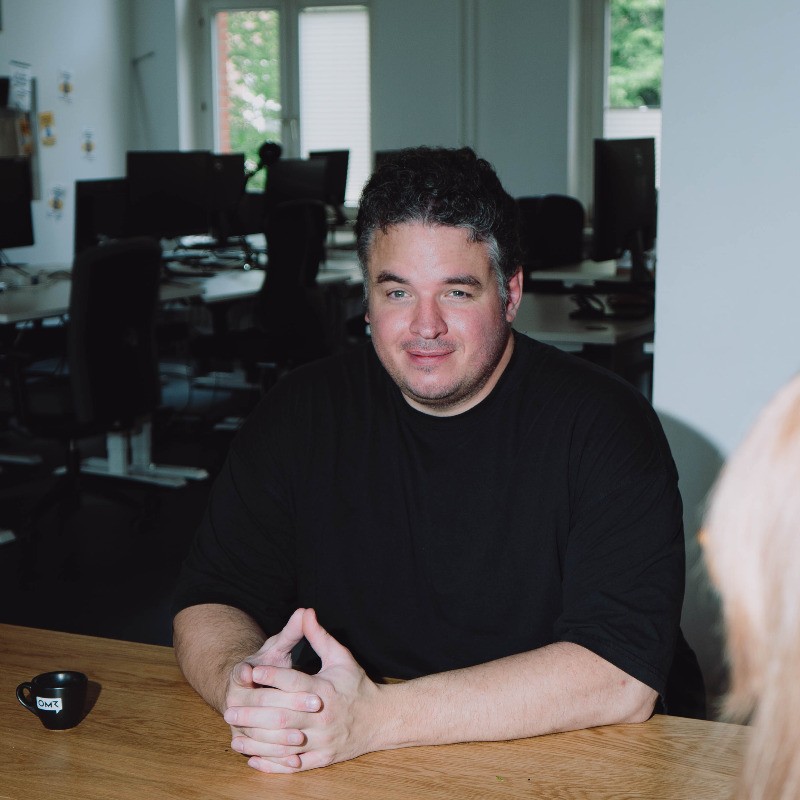
Aaron Wahl, founder and keynote speaker
"I do not explain autism from the outside. I translate autistic neurology into HR language."
Autistic, founder and author. More than 150 keynotes for DAX corporates, the German Federal Employment Agency and educational institutions. Autobiography "Ein Tor zu eurer Welt" with Droemer Knaur, foreword by Tony Attwood.
Request a first call
Send us a short message with your organisation, your role and a rough idea of demand. We get back to you with a concrete proposal that fits your situation.
✉ Send enquiry by email