Research
For Researchers: How Autistic Mirror Operationalises Mechanisms
A mechanistic AI tool for autistic adults, built so that the constructs it uses stay empirically testable, the safety posture stays auditable, and the people the research is about actually reach the tool.
Most research on autistic adults does not reach autistic adults. Findings live in paywalled journals, clinical curricula, and policy documents. Autistic Mirror closes that distance by translating the mechanistic literature into explanations the people described by the research can read on the day they need them.
This page is for autism researchers, clinical research groups, methods specialists, and institutional review boards. It explains what the platform operationalises, where the numbers come from, what it does not claim, and how a collaboration can look.
What the platform operationalises
Autistic Mirror is built around a hierarchical mechanism library. Each construct is embedded into the system prompt with a three-layer structure: What happens, Why neurologically (the mechanism), and How it shows up in the situation the user described. A response names one primary mechanism in full and at most two secondary mechanisms in shorter form. Beyond five mechanisms in a single answer, the question is treated as too broad rather than fanned out into a list.
The constructs that are currently operationalised include:
- Sensory processing fatigue. Glucose cost of sustained sensory gating over time, explaining the "spoon" phenomenon without metaphor.
- Monotropism. Attention that concentrates on few channels at greater depth, with predictable cost on transitions.
- Predictive coding. Prediction error accumulation under poorly calibrated priors, anchored in Friston and Pellicano/Burr.
- Masking. Cortisol load plus prefrontal dual task, anchored in Hull and colleagues.
- Time blindness. Default Mode Network and cerebellar timing, distinguished from executive action planning.
- Polyvagal regulation states. Shutdown versus meltdown framed via Porges' three-circuit model, with sympathetic and dorsal vagal differentiation. Used only when the user's question makes the differentiation diagnostic.
- Executive dysfunction, alexithymia, interoception, rejection sensitivity. Treated as mechanism, not as personality.
Co-occurring conditions are differentiated from autistic mechanisms by aetiology. EDS, epilepsy, diabetes, Tourette, ARFID, ME/CFS, and sleep disorders have their own causal pathways and are framed accordingly, not absorbed into an autism explanation.
Numbers that ground the work
The figures below describe the platform as it stands today. They are repository-verifiable.
- Seven user-interface languages. German, English, Spanish, French, Dutch, Brazilian Portuguese, and Danish.
- 270+ blog articles. Mechanistic, identity-first, no behaviour scripts.
- Five-stage safety architecture. Crisis detection, output topic classifier, prompt-leak marker check, cross-lingual leak classifier, and an action-script block. Stage three blocks recommendations that harm the autistic nervous system regardless of the framework that proposes them.
- Over 2,500 automated tests. Around 1,600 frontend tests and more than 900 tests for the chat backend, plus a red-team suite with multi-turn drift scenarios.
- Tamper-evident audit log. SHA-256 hash chain with daily verification cron and owner notification on mismatch.
- GDPR-compliant export. Article 15 data subject access in machine-readable JSON, including soft-deleted conversations and glossary entries.
- No training on user data. Conversations are never used for model training and never shared with model providers beyond the inference call itself.
How it reaches the people the research is about
The barrier between research and the people described by the research is rarely intellectual. It is practical. The constructs sit behind paywalls, in clinical training, or in twenty-page review articles. Reaching them requires reading time, vocabulary, and energy that the relevant population often does not have.
Autistic Mirror lowers that distance through ordinary product decisions. Three free probe messages let someone test whether the tool speaks usefully about their own situation before any payment is involved. Twenty-three languages widen reach beyond the anglophone literature. Identity-first writing meets the community's preferences as documented in Kenny and colleagues. Voice input and read-aloud output reduce the cost for autistic adults with co-occurring dyslexia, dyspraxia, or chronic writing fatigue. The free blog carries the mechanistic explanations into the open web for anyone who never signs up. A workplace plan addresses the most common environment in which autistic adults burn out.
None of this replaces clinical research. It changes the route by which a mechanism documented in 2014 reaches the autistic adult who needs to understand their own day in 2026.
What we can offer to research groups
Autistic Mirror is a closed application in private hands. Research groups can collaborate with us on request and under agreement. Concretely:
- Shared operationalisations. The mechanism library, the safety taxonomy, and the construct mappings can be documented for replication or comparison studies.
- Replication on the documented architecture. The system prompt structure, the five-stage safety pipeline, and the multi-turn red-team protocol are described well enough for independent groups to rebuild and probe variants.
- Infrastructure for recruitment. Research groups conducting studies on autistic adults can use the platform as a recruitment surface, subject to the relevant institutional review and the platform's own ethics review.
- GDPR-compliant exports for participating users. Users who choose to enrol in a study can export their own data and contribute it on their own terms. The platform does not push data sideways.
- Independent evaluation. Groups with their own grant funding can evaluate the platform in controlled settings. The architecture is documented; the operator is reachable.
What we do not claim
Autistic Mirror is not a medical device, not a diagnostic instrument, and not a therapy. It does not make clinical decisions, does not replace clinical care, and does not give individualised treatment recommendations. Causal claims about efficacy are not made in the absence of controlled studies. The application is framed as a mechanistic explanation engine and an information surface, suitable for research collaborations on request. It is not an open research platform: the source code remains closed and in private hands.
The safety architecture is published in Autism in Adulthood (Q1 journal, impact factor 4.2, metric year 2025): Wahl, A. (2026), DOI: 10.1177/25739581261490537. What is published is the documented architecture, not a therapeutic outcome.
Get in touch
The dedicated address for research inquiries is research@autisticmirror.app. The app-side research page at autisticmirror.app/research carries a structured lead form and the current trust hub.
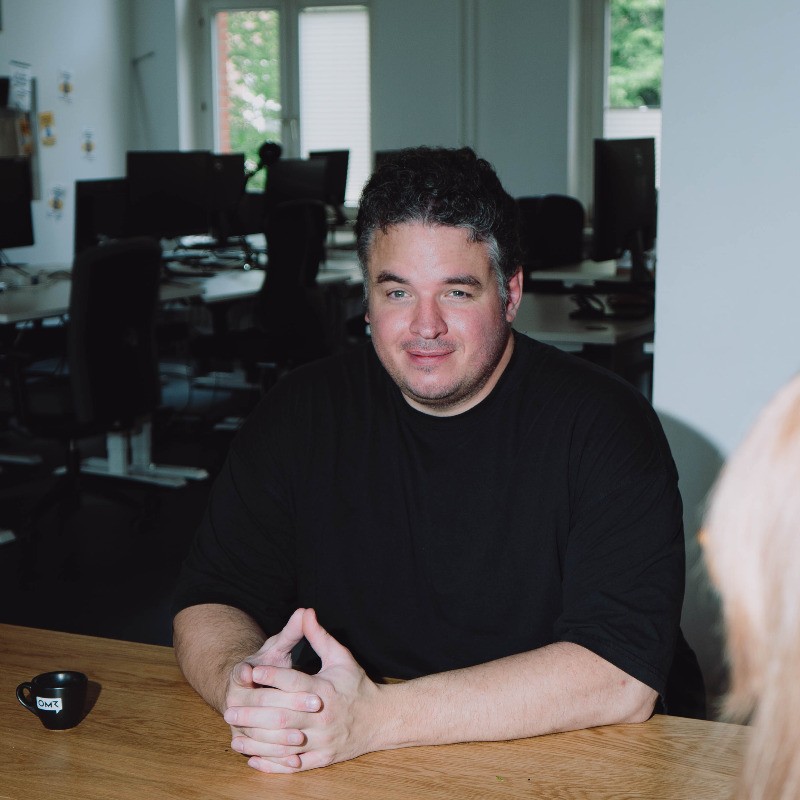
Aaron Wahl
Autistic, founder of Autistic Mirror. Builds the platform and corresponds with research groups.